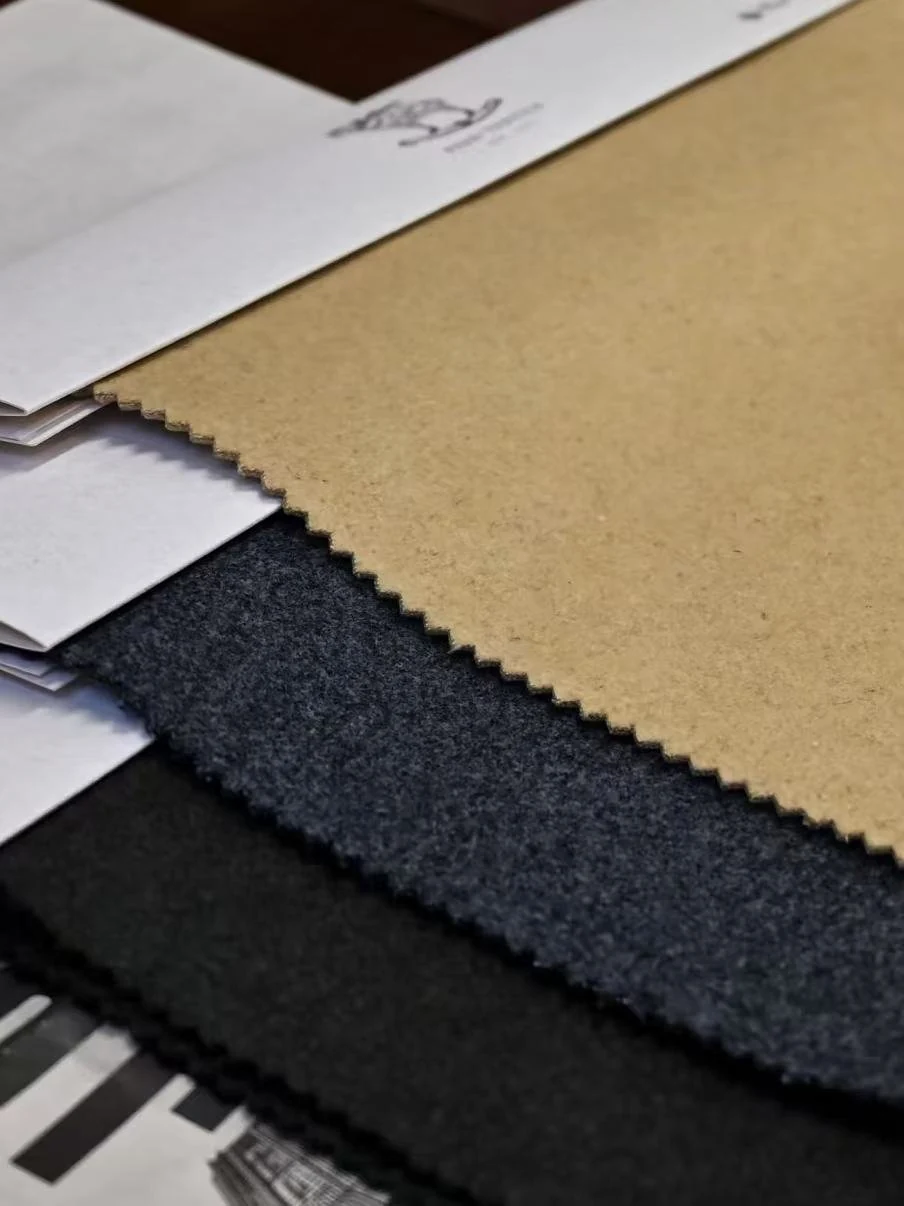
 Melton
Sample selection notes
Melton, check tweed or flannel for one coat brief?
Consider an example brief: an autumn/winter coat, a restrained silhouette and a sample garment as the next step. These are design goals, not a customer order.
Melton
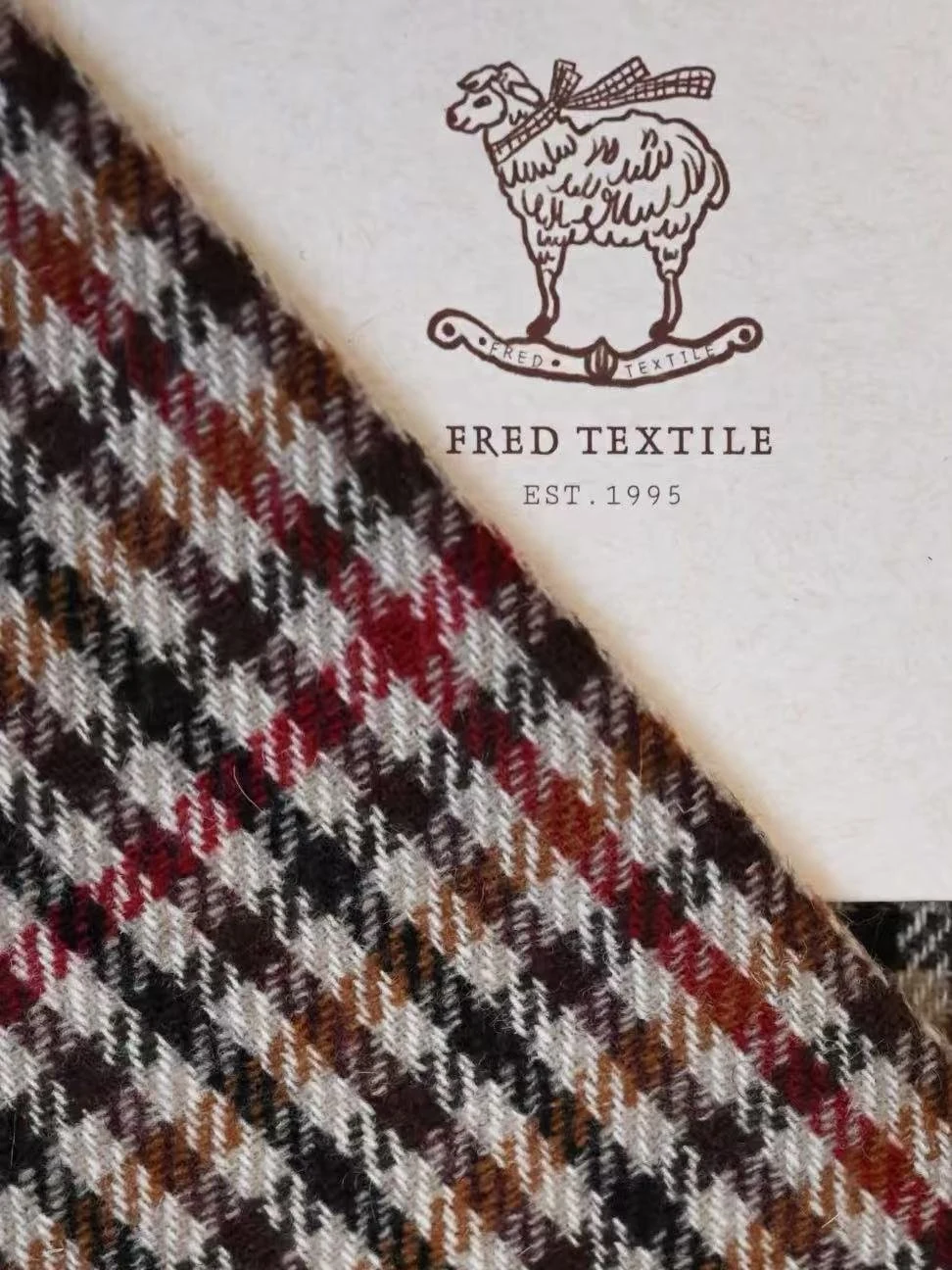 Tweed
Tweed
Fabric direction
Classic Check Tweed
A visible check and mixed colour texture for a patterned garment direction.
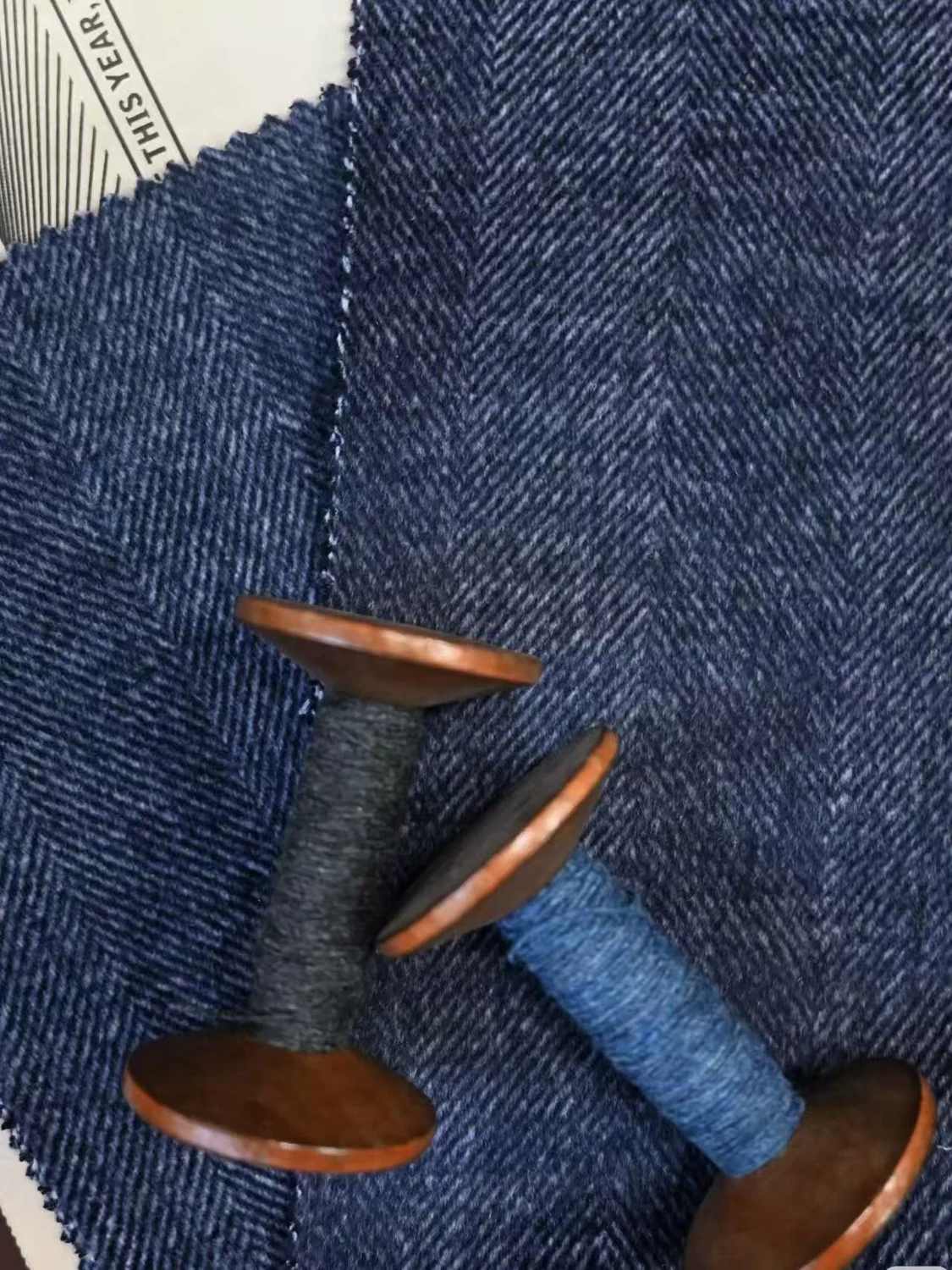 Flannel
Compare three visual starting points
| Direction | Visible starting point | What to ask for |
|---|---|---|
| Classic Melton | Solid-looking, compact surface | A cutting to review fold, seam bulk and silhouette |
| Classic Check Tweed | Clear check and mixed colour texture | A larger cutting to see repeat and matching |
| Blue Herringbone Flannel | Tonal blue herringbone pattern | An article suitable for the coat brief, plus drape and pressing trials |
These archive photographs were not taken as a controlled comparison. Their crop and scale differ. Use them to identify questions, then request physical samples for the actual decision.
Keep two contrasting candidates
For a quieter surface, begin by comparing Melton and the tonal herringbone reference. For a more visible pattern, compare the check and herringbone. Neither choice establishes warmth, drape or wear performance.
Ask Fred to propose suitable coat articles and document their composition, finished GSM and usable width. Compare the proposed samples with the same lining and construction plan.
From direction to development
Turn the coat idea into a sample brief
A photograph starts the conversation. Physical samples help you make the decision.